The Evolution of the Beauty Industry, How Brands and Retailers Can Thrive
Beauty Trends Q&A Part One with Daniela Ciocan
CEO of Access Beauty Insiders and Unfiltered Experience
Ali Bennett: By way of introduction, we met you through the Beauty Matter Next Awards. We would like to thank you for being gracious with your time and expertise. You are an amazing role model as a female entrepreneur and beauty expert. My first thought was that I wanted to share your knowledge and insights with our audience as they could both be inspired listeners.
Daniela: Thank you for having me. It's always lovely to connect. You know, in my career, one of the things I really excelled at is building an amazing network of friends, industry professionals, and loyal customers. I am always happy to connect, to share ideas as it energizes me. So, I'm glad we connected and am happy to be here.
Ali: Tell us about your career and what led you to the beauty industry, for those that haven't met you before.
Daniela: So I fell into the beauty industry just by sheer coincidence. As a typical teenager, I was not sure what I wanted to do. I graduated high school and it was like what is next? Oftentimes it's your parents who guide you, and they tried to steer me into accounting. That was not my passion.
So I dropped out of school and started working. I was hired at a department store selling beauty products behind a counter, and I became fascinated with the world of beauty and cosmetics. At the time Estée Lauder had these amazing training programs, and I fell in love with the science of skincare. It was truly a wonder — who makes these formulas? Who pays attention to skincare? Why does this matter? I started to wonder why ladies make these decisions of what to buy.
I started doing research and low and behold, the Fashion Institute of Technology (FIT), in New York city, offered a bachelor's degree in marketing for cosmetics. Now they have a master's degree as well. I graduated with a degree in cosmetics and fragrance marketing, and then I received an MBA from FIT as well.
I was able to advance very quickly and have a lot of responsibility. And from there on, after nine years of doing that, I moved to Las Vegas and there was this trade show called Cosmoprof that needed a director of marketing. It was my first executive role, and I was given so much authority and responsibility. I created so many programs about beauty and I was recognized with several awards. I was nominated for the LVCC awards and there were several others as well. And I was the first woman to win the top American beauty award (CEW Award) in a long time, which was very exciting for me.
I had a lot of fun and became very involved in the industry. I served on the boards of CEW and the Independent Beauty Association, and worked with many trade magazines. Afterwards, I launched my own event, which was called Cosmoprof North America, and we did that for a while, then COVID hit and that ended it. So I decided to not do it anymore.
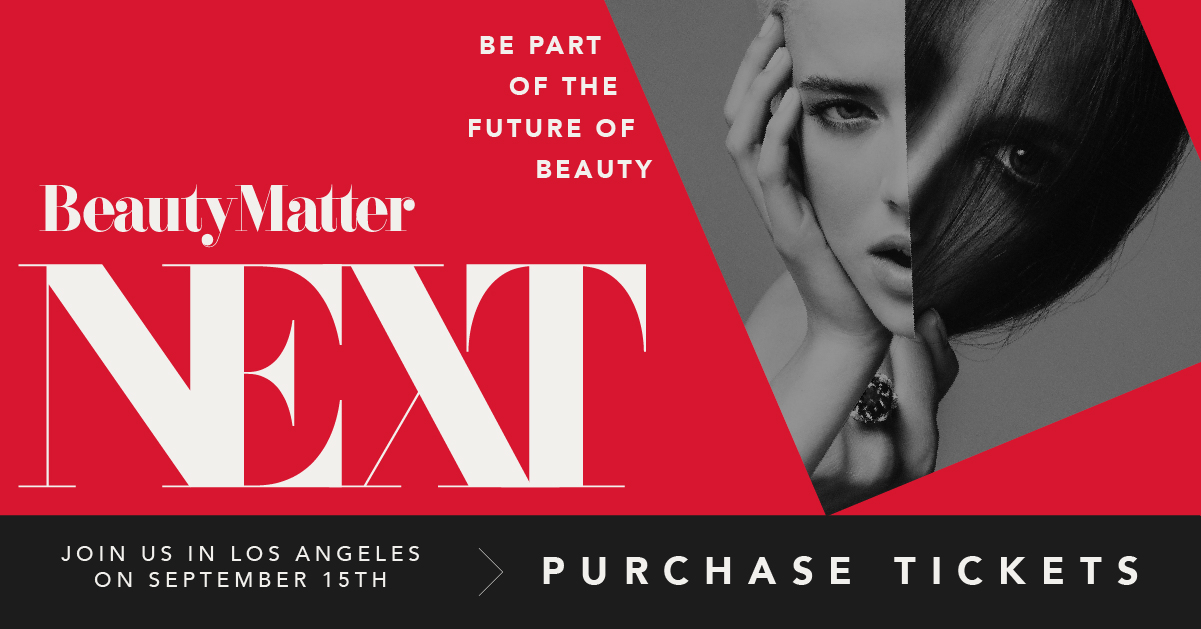
Instead I partnered with Beauty Matter to launch the Next Awards Summit, which is happening this week in LA starting on September 15th. I also have a consulting business working with many smaller brands helping them launch and scale up, which I'm very passionate about.
Ali: How do you think the industry has changed or evolved since you started?
Daniela: A lot!
When I started, the industry was very one dimensional. The brand controlled everything. They put out this beautiful, flawless image. We had these idealized pictures of beauty in magazines. The industry was controlled by a few editors, who were served by some professional photographers and some professional models, and there were certain brands that were anointed. Everything was very aspirational. Then social media happened — slowly by slowly, we started seeing dermatologists and some professional makeup artists like Von Milky and Marc Jacobs came to the forefront of beauty promoting small and indie brands. This came to the foreground of beauty trends. They were coming up with these new trends before the industry started covering them. That really opened the door to what is now known as the Indie Beauty Space. The other thing that really changed was the ability to communicate and connect with consumers through social media platforms. Really, you had to be a professional beauty magazine to get in front of shoppers, but now anyone can do it. I think that's really opened things up for independent brands, indie beauty editors, because that you can really tell your story and connect with consumers.
Ali: I totally agree. What is most impactful in driving sales?
Daniela: If you want to talk about the store environment and how brands compete there, I think you have to look at macro trends that we're seeing, particularly when it comes to technology. You, at AlgoFace, are focusing on this area so I can mention it. There's a difference between a brand making a recommendation, a retailer making a recommendation and a machine (AI) making a recommendation. Consumers trust technology more and more. They're comfortable with it. And it's objective in its recommendations.
When it comes to technology, retailers, like Ulta and Target, are starting to utilize AI to drive merchandising decisions. They now have the ability to surface data to benefit the buyer. Let's be honest, for so many years consumers were being sold on whatever was stocked on the shelf — the product with the biggest margin for the retailer. AI can now look at sell through and make smarter recommendations. And it can tailor it to a specific consumer.
Utilizing AI and technology is going to make the whole in-store experience that much better for consumers.
Ali: I think it'll be an interesting shift when more retailers start to use AI and start to use technology. Also, there's a difference between a department store versus a drug store. Two different experiences. Hopefully, we don't, as a technology company, turn too many brands and then have to incorporate AI with the experience of the store representatives. But, it'll be an interesting shift.
Daniela: Well, technology also helps the store's associates in so many ways. For example, nowadays, if you have beauty advisors in stores, you can utilize live streaming. You can use virtual to connect with your customer. This is the new way of engaging with your clientele. You can react to your customer at varying times of the day and be available for guidance. So using technology for brand representatives to connect helps their beauty advisors to partner with the beauty advisors to make them far much more efficient and more connected with their customers.
On the flip side, technology can also serve as a tool for beauty advisors. There's so many beauty brands and it's so expensive for brand representatives to do training and cover stores all over the country. You can use technology in virtual order to educate using virtual aids and rewards. Technology can also be used as a training and loyalty program. By using technology, we break the relationship with the advisors, quite the contrary. It can be very complimentary.
Technologies like AlgoFace's virtual try on are so beneficial in mass market environments, for example, in drug stores, because you have no testers. For the consumer, they have no ability to really find out what the products look like on them or their returns for the brand. So at the end of the day, it's a win-win for everyone. The retailer is happy. More products, more sales. Consumers are happy because they now have an easier way to identify products at mass. That's an opportunity that I foresee.
Ali: Agreed. It's interesting though, because as much as it seems to make total sense, a lot of mass market retailers really have not implemented solutions.
Daniela: I know, I know.
Ali: If you've ever shopped for cosmetics in a drug store, it's not a great process.
Daniela: No, it's not, and more, more than that, you will end up buying a shadow or lipstick color that is wrong for you. You end up not wanting to go back to that store so you toss it away instead of returning it. And the store and the brand loses on that return so it's really bad for everybody.
Ali: Or how about a brand? It does all of this work to get the super popular, trending shade out there and exposed. Then someone goes into the store and it's out of stock. So back to your point about in-store experience as well as out-of-store experience. AI and data can help manage inventory and stock replenishment in a whole new way — both an in-store experience as well as the ability to find the right products. In a different regional market, this is more popular in the South, in the Midwest. And there's a huge part of that is going to manage inventory.
Daniela: That's right.
Ali: Let's talk a little bit about digital. We talked about the physical location. What are some trends that you think are happening in digital that are driving sales? I know you mentioned the extreme competition for commerce and selling products online.
Daniela: One of the things we're starting to see a little bit more of is the use of NFTs to support new product launches. I'm very excited about this trend because you can really marry the physical and the digital experience together. And there's the ability to not only find the right products but also the ability to have that stock in-store experience. Those are some things are more popular. In a different regional market, you can have a product that you can find and it'll give you that digital product, so you can have a physical in the store.
Ali: Is it going to be like the digital copy or the MP4 that goes with your CD?
Daniela: Right?! It solidifies the relationship of a brand with their avid fans. It can provide access to unique VIP events. I think that that's something that we should watch out for. We're starting to see some major brands put money behind it.
The whole Metaverse, I don't know, I'm kind of on the fence. I mean, I hear a lot of conversations and some brands are going all in. I've heard successes from especially fashion retailers that cater to a younger demographic. I've heard of different levels of success from the beauty retailers in the Metaverse, so again, start to see some interesting things happening on the on the digital copy side.
Ali: There you go! We got connected through the Beauty Matter awards. So tell us about the event that's happening on the 15th and why should someone attend, how can they get more information and all that good stuff?
Daniela: The awards started out on the idea that while we see so much recognition and attention being put towards the physical product, for innovation in product, there isn't as much emphasis being put on the people, on the doors, on the companies that create impact through their approach to driving businesses forward. It was the first of its kind for the beauty industry. We wanted to recognize brands that are doing good for society.
With some awards, it's not quite clear who's voting so we used judges that have unique expertise and we coupled them with categories where we felt that their unique insights and expertise would match the category. Then we selected a group of judges from different backgrounds: industry experts, investors, and founders to create a more democratic process. Then we selected 10 nominations per category. The judges scored on criteria provided and we determined the winners. Nominations will be open again, starting on September 15th at the event. We will also be live streaming it.
Ali: Fantastic. Well, thank you so much for your insights today. Everything you shared, amazing expertise. Thank you. Thank you.
Daniela: This was so much fun. I totally enjoyed it.
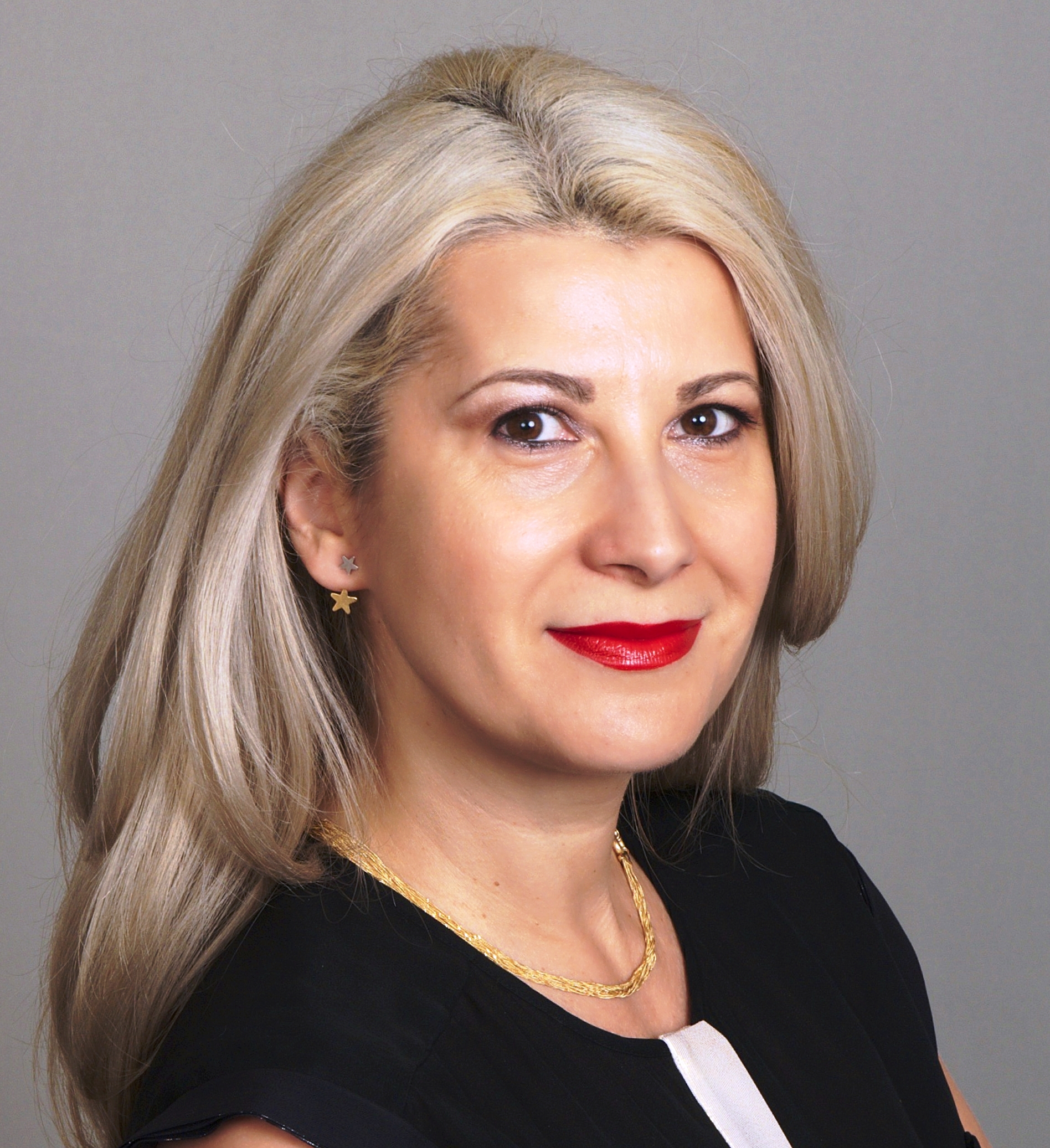
About Daniela Ciocan:
Daniela Ciocan is the Founder/ CEO of Access Beauty Insiders, a specialized firm with a proven 360-marketing approach targeting working with direct-to-consumer brands looking to scale quickly. Quoted in various media outlets such as WWD, Forbes, and Newsweekly, she most recently created an award series for the beauty industry, Beauty Matter Next Awards, with a gala happening between September 2019-2020. Daniela is credited with growing Cosmoprof from 20,000 attendees to in excess of 40,000 in just seven years. She is also continuously listed as one of America's "50 Fastest Growing" and "Top 100 Influential People" in the beauty industry. Daniela has worked with large brands such as Sephora, Ulta, Vogue, Target, Walmart, Marcus, QVC, and Kabillion Entertainment to name a few. She has been featured in a number of publications including "Best in Business" and "Beauty CEO of the Year" showing the importance of Daniela's vision for (and contribution to) the beauty industry.
Instagram: @danielaciocan